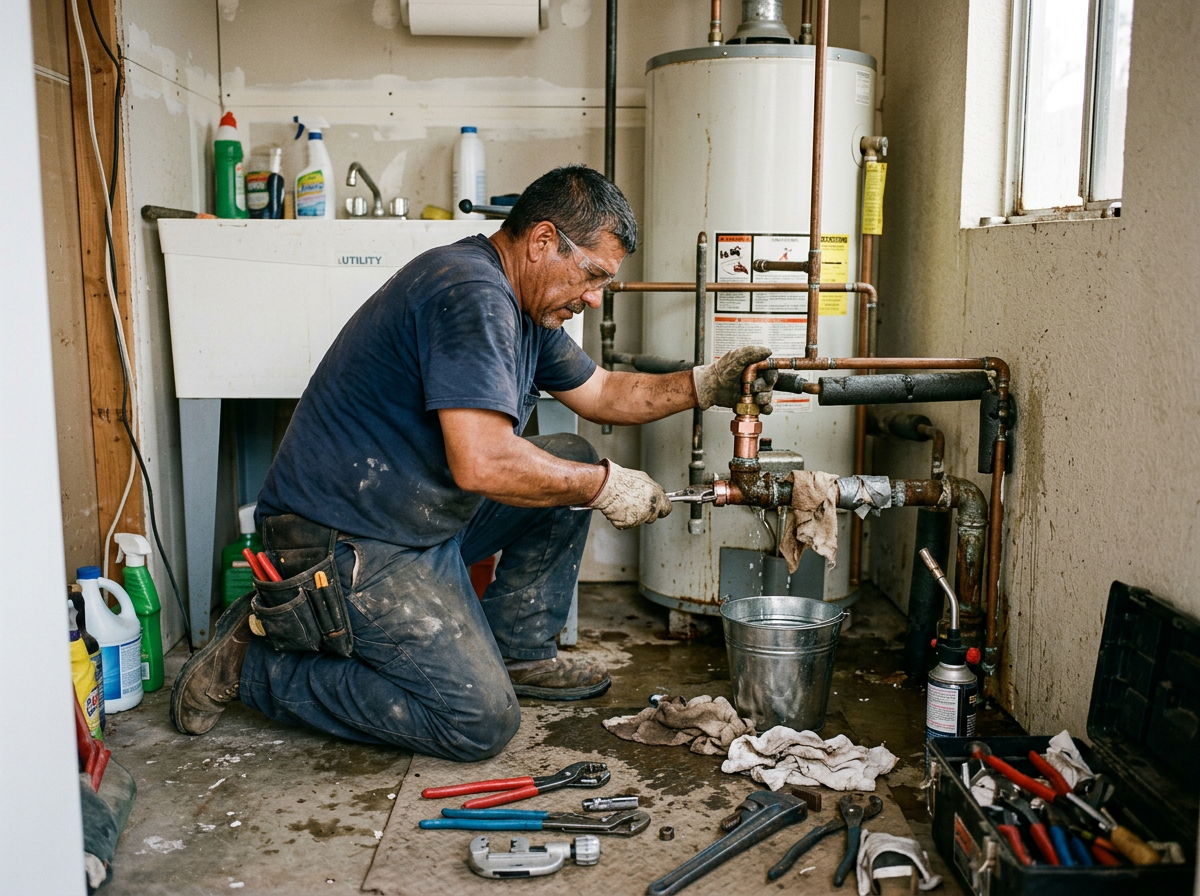
Tucson slab leaks often start with pinhole perforations in copper caused by high calcium and magnesium in the municipal supply. Electronic amplifiers and acoustic sensors trace the sound of escaping water through concrete without random demolition. Once the approximate zone is identified, the line is isolated at the manifold or nearest accessible valve and pressure tested to confirm the exact failure point before any concrete is opened.
Caliche hardpan under most Tucson slabs makes excavation slow and expensive, so the decision between a localized break and an overhead reroute is made after the pressure test. In homes built from the 1950s through 1970s in Midtown, Flowing Wells, and Casas Adobes, repeated pinholes on the same run signal that the entire copper line has reached the end of its service life. PEX is pulled through attic spaces or interior walls because it resists internal corrosion and avoids disturbing the slab a second time.
A typical emergency sequence begins with shutting off the main valve, confirming the leak with a pressure drop test, locating the failure with both electronic and acoustic tools, then choosing the least invasive repair path. When multiple leaks appear within months, the remaining copper is abandoned and a whole-house PEX reroute is performed to prevent further hidden failures. All new lines are pressure tested at 100 psi before walls or ceilings are closed.
Homeowners commonly notice a sudden warm floor spot, unexplained water-bill increase, or running-water sound with fixtures off. These signs appear because slab-on-grade construction leaves no basement access and leaks remain contained under the concrete until pressure forces moisture upward through tile or baseboards.
Technician insight
In Tucson, the thing that catches most people out with Emergency Leak Repair is assuming one pinhole is an isolated event when the real issue is decades of internal corrosion from the mineral-heavy supply water on 1950s-70s copper in Midtown and Drexel Heights tracts.
Flowing Wells Home with Warm Floor and Rising Bill
Problem: unexplained water-bill jump and audible running water at night. What we found: multiple pinholes in original copper under the slab caused by hard-water corrosion. What we did: isolated the line, abandoned the copper, and pulled new PEX through the attic. Outcome: leak stopped without further slab work and no repeat failures reported.
Emergency Leak Repair Services We Offer
✓Acoustic Leak Detection
Listening equipment isolates the exact sound of water escaping under the slab so excavation stays minimal.
✓Electronic Line Tracing
Signal transmitters follow copper or PEX runs through concrete to map the leak location before any breaking begins.
✓Pressure Isolation Testing
Individual lines are valved off and pressurized to verify which segment has failed and whether the rest of the run remains sound.
✓Emergency Slab Access Repair
Targeted concrete removal exposes the leak for soldering or coupling while protecting surrounding floor finishes.
✓PEX Overhead Reroute
New PEX lines are run through attics or interior walls to bypass corroded copper without additional slab excavation.
✓Post-Repair Pressure Verification
All repaired or rerouted lines are retested at full system pressure and monitored for drops before walls are closed.
Emergency Leak Repair Cost in Tucson, AZ
| Service | Typical Range | What Affects It |
|---|---|---|
| Emergency Site Visit and Detection | $250–$550 | Higher after midnight or on holidays; includes acoustic and electronic tracing. |
| Spot Slab Leak Repair | $1,800–$3,800 | Varies with concrete thickness and finish restoration needed. |
| Single-Line PEX Reroute | $2,800–$5,200 | Attic or wall route; price rises with home size and fixture count. |
| Whole-House PEX Repipe | $6,000–$14,000 | Typical three-bed two-bath; copper alternative costs more. |
Ranges are typical for Tucson, AZ and confirmed with an exact written quote before any work starts.
How it works
- 1
Initial Response and Shutoff
Technician arrives, confirms active leak, and secures the main valve to stop water loss while gathering details on bill spikes or floor symptoms.
- 2
Detection and Isolation
Acoustic and electronic tools locate the failure; the suspect line is isolated and pressure tested to confirm the exact perforation.
- 3
Repair Path Decision
Localized slab break or attic reroute is chosen based on home age, number of prior leaks, and caliche depth at the site.
- 4
Installation and Testing
New PEX or repaired copper is installed, pressure tested at 100 psi, and monitored before finishes are restored.
- 5
Final Walkthrough
Homeowner receives explanation of findings, remaining copper condition, and recommendations to prevent future pinholes.
Pricing
Emergency calls receive an upfront range after the initial assessment; final cost depends on access difficulty and whether rerouting is required.