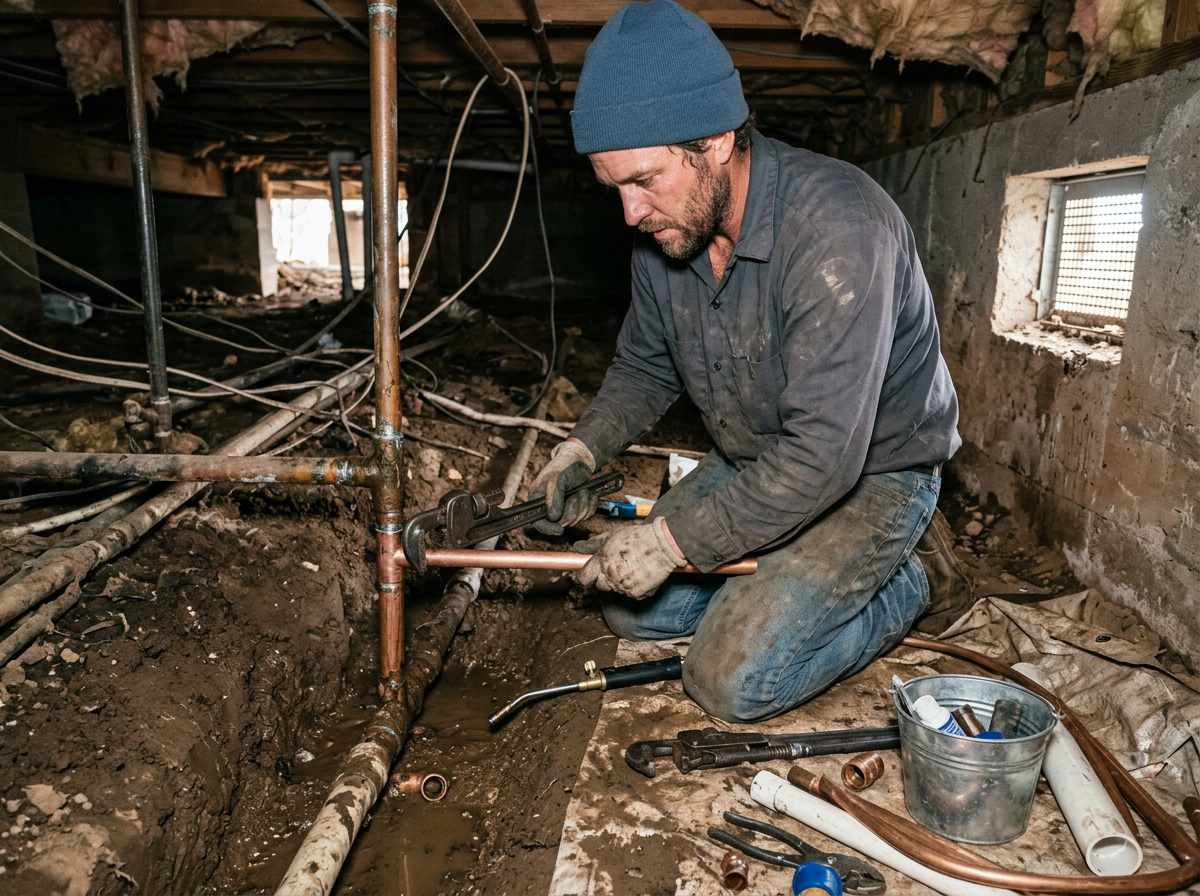
Tucson slab leaks almost always begin with pinholes that form when high calcium and magnesium in the supply water corrodes copper from the inside. Technicians first use electronic moisture meters and acoustic listening devices to narrow the leak zone without unnecessary concrete removal. Once the general area is identified, the line is isolated at the meter and at the nearest fixture so a pressure test can confirm the exact segment that is losing pressure.
After isolation, the decision between spot repair and reroute hinges on pipe age and leak history. Homes in midtown, Flowing Wells, and Casas Adobes built on 1950s-1970s copper often show repeat pinholes within months. Because caliche hardpan makes excavation slow and expensive, overhead rerouting through the attic or interior walls is usually the more economical long-term choice once two or more leaks appear in the same run.
PEX tubing is the standard replacement material because it resists the same mineral attack that destroys copper. The sequence begins with shutting off water at the meter, draining the line, and cutting access points at the slab edge or through walls. New PEX is pulled or fished to each fixture, pressure tested at 100 psi for a full hour, then tied back into the meter with appropriate transition fittings. Slab openings are patched only after the new line holds pressure.
When a home produces three or more pinhole leaks within a two-year span, the entire copper run is considered finished. Continuing to chase individual leaks wastes money and risks further slab damage. At that point the permanent solution is a whole-house repipe using PEX routed above grade so future water chemistry issues no longer threaten the foundation.
Technician insight
In Tucson the thing that catches most people out with Water Line Repair is how fast hard water turns one pinhole into a string of them across 1960s and 1970s copper in midtown and Drexel Heights tracts; homeowners often expect a single fix until the second or third leak forces the reroute conversation.
Casas Adobes Copper Failure
Rising bills and a warm tile spot led to isolation of the main supply line. Multiple pinholes were found in the original 1970s copper under the slab. We installed a full PEX reroute through the attic, pressure tested the new line, and left the old copper abandoned in place.
Water Line Repair Services We Offer
✓Pinhole Leak Detection
Electronic and acoustic equipment locates the exact origin of slab leaks caused by internal copper corrosion without random concrete removal.
✓Line Isolation and Pressure Testing
Technicians isolate individual supply runs at the meter and fixtures, then perform controlled pressure tests to verify which segment is leaking.
✓Copper Water Line Spot Repair
Targeted replacement of a single damaged copper section when the rest of the line still tests sound and the home has no history of repeat leaks.
✓PEX Repipe Rerouting
Overhead installation of corrosion-resistant PEX that bypasses the slab entirely, eliminating future excavation in caliche soil.
✓Whole House Water Line Replacement
Complete removal of aging copper and installation of new PEX mains and branches when multiple pinholes indicate the entire system is failing.
✓Post Repair Pressure Verification
Full-system pressure test and flow check after any repair or repipe to confirm the line holds pressure before walls or slab patches are finished.
Water Line Repair Cost in Tucson, AZ
| Service | Typical Range | What Affects It |
|---|---|---|
| Spot Slab Leak Repair | $2,000–$5,000 | Varies with depth, location, and whether reroute is chosen instead |
| PEX Repipe Reroute | $4,500–$8,000 | Typical three-bed two-bath home; attic or wall access reduces slab work |
| Whole House Copper Repipe | $8,000–$15,000 | Higher end reflects longer runs and more fixture connections |
| Pressure Test And Leak Verification | $250–$450 | Standalone diagnostic when leak location is uncertain |
Ranges are typical for Tucson, AZ and confirmed with an exact written quote before any work starts.
How it works
- 1
Initial Assessment
Review water bill history, listen for running water with fixtures off, and note any warm floor spots or musty odors typical of Tucson slab leaks.
- 2
Electronic And Acoustic Location
Use moisture sensors and listening equipment to pinpoint the leak zone while minimizing slab disturbance in hardpan soil.
- 3
Isolation And Pressure Test
Shut off the line at the meter, isolate the suspect run, and pressurize to confirm the exact leaking segment.
- 4
Repair Or Reroute Decision
Evaluate pipe age and leak frequency; choose spot repair or PEX reroute through attic or walls based on long-term economics.
- 5
Final Test And Restoration
Reconnect, pressure test the new or repaired line, then restore access points once the system holds steady pressure.
Pricing
Spot repairs typically fall in the low thousands while full repipes range higher depending on home size, access, and material choice.